STEM is Taking Root in the Toy Industry

Being a STEM Ambassador, I was very excited to read last month in one of the leading toy journals, TnP, a whole section on STEM. In total I leafed through 7 pages of STEM articles, toys and adverts. This is a great move forward for STEM in toys. I was smiling at the end of that. I expressed my excitement through the power of a highlight pen as I brushed a glow upon some key phrases:

“higher demand from customers”

“retailers making the decision to stock STEM lines”

“A key aspect of any toy, particularly those with an educational influence is that they have to be fun.”

And I’ve always said it – so you can quote me – the education sector has a lot to learn from the toy and games industry.

Whilst the toy and game sector have been creating products that help develop skills in children ranging from motor skills to creative skills for decades, this is one of the first times I’ve seen the term being used so openly in the mainstream commercial toy sector. A focus on STEM is only a good thing nay a great thing.

STEM, standing for Science, Technology, Engineering and Maths, is being drummed into the hearts and minds of every teacher to support and develop young people from a diverse range of backgrounds to develop their STEM Skills. So how refreshing it is to see this being translated into the toy market.

Since my light bulb moment back in 2003 during my class observation about to begin their numeracy session when they transformed into an excited bunch of learners ready to play maths – not do maths – but play. This was all I needed to witness and learn from their excited faces that games were a key tool to not only make learning fun but engage students in class.

To this day I have been pursuing this course for science and am so happy to see that this catching on in the mainstream. What’s thirteen years waiting when we have finally arrived. Or at least the tides are changing and just as the toy industry respond to the needs in education will the education industry respond to the needs of fun in STEM too? I hope I don’t wait another 13 years before this happens.



Getting Ready for our Perfect Accelerator

It has been an arduous journey to this point. But we are finally here. Our application to the prestigious Young Academy has been accepted. After at least 10 applications to at least 10 different funders/accelerators and it is lucky nth that has finally made it through for us.

I questioned myself after so many rejections including my sanity. Why was I doing this to myself? To keep persisting through and developing yet another proposal for yet another accelerator ending nowhere.  However, with every application I learnt something each time about myself, the project itself and our beneficiaries so it was all a worth while process. The main comfort was in the fact that I must have been doing something right because I was able to secure a few interviews meaning we were getting closer and closer to the goal. And that goal was to be a part of an organisation that believed in our work, added value and allowed us to explore with guidance and structure.

First few applications were a resounding no. I don’t blame them looking back at my amateur attempt thinking pure passion and humour would be enough to get through. Alas, nay. Then after maybe 6 applications I secured an interview. The Abertay Fund agreed to meet us but then predictably failed to see our proposition in the exciting light we did. I didn’t lose hope, maybe a little self confidence but hopelessly hopeful each time. More applications to other accelerators; Seedcamp, Wayra, UnLtd, Emerge Venture, BBCLABS, Nominet Trust, Bethnal Green, IC_Tomorrow, School for Creative Startups. The last one actually accepted us but then it’s not surprising considering it would have cost £1000. I decided not to go with them in the end. I also felt they would benefit more from me than I from them. Arrogant or valuing myself? Well I definitely had to value myself in this process. As hard and demoralising as it all was I had to value my own experiences over the years of building a publishing business and this attitude helped me continue forward with yet another application.

And here we are; accepted on one of the most prestigious educational incubators in the country that also happens to be perfect for us; The Young Academy. We will be based in Nottingham and am reading all about how much science is celebrated on many levels in the area as well as good hotels! The University of Nottingham is only 2.9 miles from where we will be based – that’s right I plugged in the postcodes because I plan on visiting there very soon. Trent University is also supportive of STEM. Yes this location is indeed perfect. I truly hope, and happen to believe, we can support the local community with our little venture through creating jobs as well as a buzz around STEM games. The timing is perfect too with Full STEAM Ahead! campaign going strong.

So it’s true what they say, that cliché about putting your mind to it you can accomplish it…eventually. Well what can I add to all this, just this; perfect.

My innovative STEM Story #IMFGender

As a Physics teacher one of my biggest challenges was to create greater awareness around science careers so that my students understood the relevancy of science in their future careers. One particular student of mine didn’t realise that to become an Airline pilot he needed to have physics and maths A’levels.

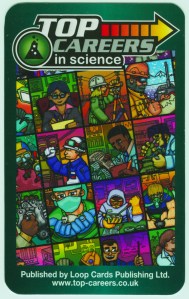
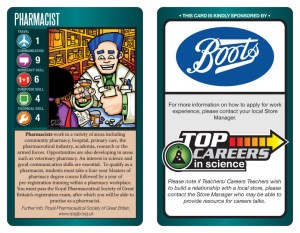
So I consciously decided to make it my mission to work on a project that allowed kids to at least sample the potential of the many careers in Science, Technology, Engineering and Maths. The Top Careers in STEM was born!

Top_Careers

It was during my maternity leave that I was able to bring it to life by inviting various corporations relevant for each career to sponsor a Career Card. Boots was my first and they agreed to sponsor the Pharmacist Career Card.


tcis_preview_pharmacist

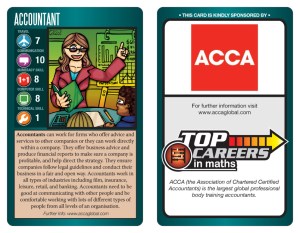
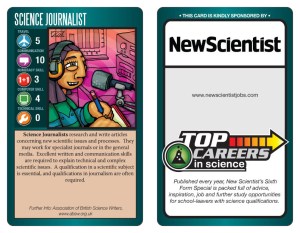
Once they were on board the sponsors came thick and fast.tcim_preview_accountanttcis_preview_sci-journalist

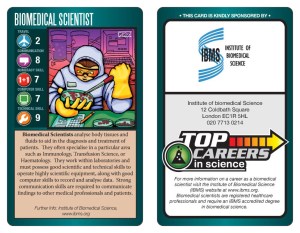
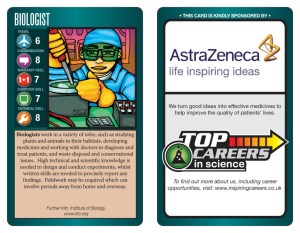
tcis_preview_biomedical-scitcis_preview_biologist

And of course…..

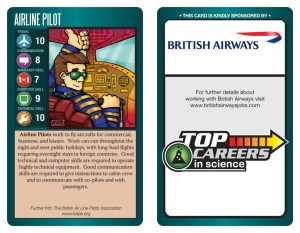
tcis_preview_airline-pilot …..amongst over 40 otheres

Now these games are best sellers at a Prospects, a specialist in careers education and employability resources.

This publishing experience has allowed me to share my work with talented teachers like Ros Walker to help publish their own STEM games.

photo (6)

Elemons launches PopJam channel to bring the fun of science to kids

Elementals launches channel on PopJam, the Kids Social Content Platform, for their kids property, Elemons

London, 12th February 2016

Elemons, the kids science gaming brand, will launch its first channel on kids social content app,PopJam.

Created by Elementals, the highly experienced team who tackle STEM social challenges through art, games, and stories, the Elemons gaming brand was launched to make science more fun and interactive for kids. In addition to working with schools, Elemons will now have a strong presence in the kid’s digital market, through providing mobile content for kids aged 7-12 on PopJam.

PopJam is owned by SuperAwesome, the largest kids digital marketing platform in the world. Designed specifically for the under-13 mobile audience, the app will provide a safe and moderated environment in which Elemons fans can interact with branded content and let their creativity flow.

UK & Ireland based visitors to the Elemons PopJam channel will be able to create and share their own Elemons inspired art, take part in quizzes, complete puzzles or watch videos featuring characters and content from the brand.

To sign up for the Elemons PopJam channel, download the App for free from the App Store or Google Play.

“Our Elemons brand is all about connecting with kids on their level to encourage them to learn more about STEM and show them how fun and exciting science can be,” comments Eiman Munro, Creator of Elemons and co-Founder of Elementals. “PopJam will be an ideal partner to help us reach this digital generation of kids, encourage them to be creative around science and start an ongoing conversation with our audience in a safe, moderated environment.”

About SuperAwesome

SuperAwesome (@GoSuperAwesome) is the largest kids digital media platform in the world, reaching over a quarter of a billion kids each month across mobile, web and online video. SuperAwesome’s technology and products power kid-safe advertising, parent-portals and COPPA compliance for hundreds of brands and agencies around the world. Clients includes Lego, Warner Bros, Hasbro, Spin Master, Nintendo and many others. ;

-AwesomeAds is the industry’s leading kid-safe, COPPA-compliant ad platform used by hundreds of brands and agencies in the US, UK, Australia and Southeast Asia.

-Kids Web Services (KWS) provides compliance-as-a-service tools for kids’ content creators and recently announced Hasbro and Walker Books as the latest clients.

-SuperAwesome Insights, the company’s dedicated Research and Insights arm is used by a huge number of FMCG brands both inside and outside the kids market.

-The company recently acquired PopJam, the UK’s leading kids social content platform from Mind Candy.

Headquartered in London, the company has extensive coverage in ASEAN, including Singapore, Bangkok, Jakarta and Ho Chi Minh City as well as offices in New York, LA, and Sydney.

About Elementals

Elementals builds education-inspired brands for children. As a social enterprise it tackles STEM social challenges through art, games and stories.

Top CareersTM, and ElemonsTM are two of its main brands. Top CareersTM has been supported by major sponsors like Air Products, Boots, British Airways, Vodafone, RWE nPOWER amongst many others.  It is best seller at Prospects, a leading educational resources provider.

The Elementals team is based in London and Canada.

For further information: www.elementalpublishing.co.uk


Why Creative Skills are just as important as STEM Skills

For many years I did what I was told to do by teachers, by parents, by society. I completed my GCSEs, got good grades at A-levels went to a prestigious University studying my favourite subject, Physics, and landed one of the best finance jobs a graduate could ever wish for. But why was I not satisfied?

I didn’t know the answer to that question until many years later but all I knew was that I was getting ill. I was unhappy and no longer had the Duracell Bunny energy to continue that lie. And so the spiral downwards continued into my unhappiness and eventually solitude.

I quit my job at the age of 25 and decided to take that much needed ‘time out’, to think. After all, many students take a Gap Year – it’s become an industry in its own right. One I wouldn’t partake in until I was well into my twenties. Something I recommend at any age. I took that much needed time-out volunteering at a charity for young people in London.

It was during that year where I harvested specialist skills; the art of project management, fund raising, capacity building and many other areas the voluntary sector gave me that the private sector could not. Eventually after about a year I decided to become a teacher as I thought I could ‘give it a shot’. I had a Physics degree so became a Physics teacher, naturally. I had a vocation now.

In every career role that I had, I learned that I thoroughly enjoyed teaching others. That never changed for me. However, unfortunately, I found the politics of teaching in the public sector strangling with little room for bespoke teaching and more of a tick box exercise. I observed Heads of Department as they looked through their list of students on border grades and how they could ‘fudge’ the numbers to position their school strategically on the league tables and I just thought it a waste of time and a waste of many teaching opportunities.

On several occasions I tried to create side projects for my pupils only to be told by the Head of Science, that if I had time on my hands to take workload off other teachers. I was shocked at this attitude. But this time I wasn’t going to spiral into unhappiness, I learned that already from my first career. This time I would make my own choices and so I quit teaching. But I decided not to quit education. This was the area that I wanted to continue working in but on my own terms.

And so I realised that I was rebelling against being institutionalised against linear thinking. Focusing on ticking boxes, meeting external requirements rather than what children needed and delivering a template of learning with little creative input. This was stifling in many ways and it greatly frustrated me. I never knew I had a creative side to myself, that every single one of us does. We pigeon-hole ourselves and each other into various categories ignoring that part of us that yearns to create. But it doesn’t have to be that way. Not for me, I decided. Instead of resisting or trying to fight the way things are run the best route was to work with what was already there. To complement it – somehow.

Soon after leaving teaching I created science games that I learned to create from observing children playing maths games in the classroom (see previous blog entry). And then things started to get interesting. As I became a games publisher the words ‘gamification’ started to be coined and STEM was now a buzz acronym in schools and local councils. I was at the frontier of it with years of experience in this area. Great! My games became top sellers at Prospects Education Resources and the Science Museum took them on, yet I was still not satisfied as something seemed amiss.

For many years I felt my creativity had been stifled in favour of being academic. So I searched for a way to bring the two together. Yes creating science games was using my creative noggin – but not really, I was actually creating teacher-led resources. Yet I wanted to create child-led games with science influence.

And so I began observing children OUTSIDE of the classroom for the first time through Toy Fairs and Game Expos. And it became clear that the toy industry was where the real lessons were. Children were making the decisions for themselves here. Empowering – they could make or destroy brands with their own choices. I firmly believe now that the toy and games industry has a lot to teach the education sector. Let’s not ignore that.

The question became, how? How could I enable children to explore their creativity whilst applying it to an academic context – science. This is where the focus is now. And I’ve come to love this new career I have forged. Building brands that children enjoy and at the same time become immersed creatively, imaginatively is a dream to be a part of.

Turning all that I was brought up to believe on its head, a campaign to bring art and science was needed in a linear world. To be truly holistic though, the campaign needed to include the kineasthetic element which included moving. To use our bodies would maximise our mental capabilities which is why I included parkour as a special ingredient in the project that has been launched.

With all these important ingredients in place the linear world considers my new venture as ‘disrupting education’ – there’s another tick box for you. Well so be it. The campaign has begun and I am looking forward to working with all the schools registered in this creative campaign that I hope will allow children to realise their creativity as much as I did not at their age. So it’s Full STEAM Ahead for 2016.

Disrupting Science Learning

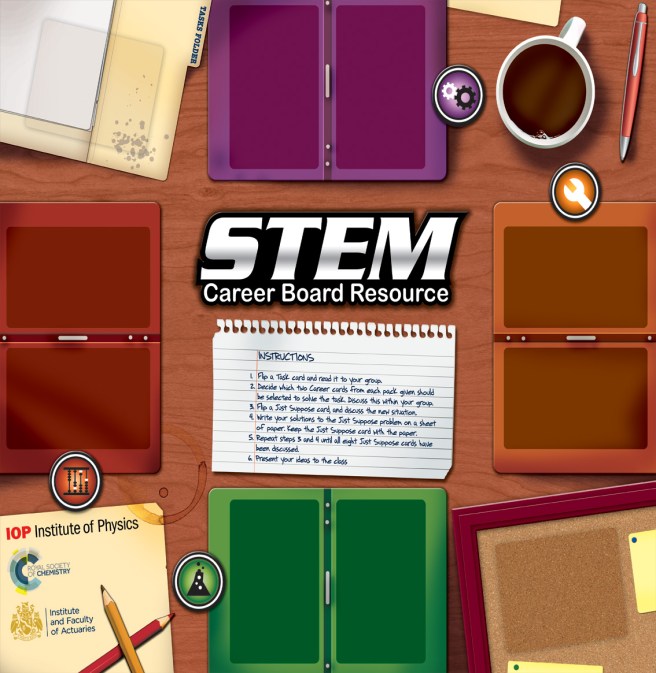
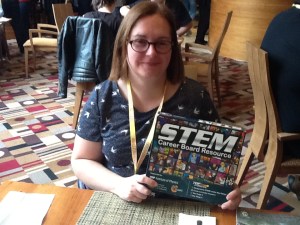
STEM board_pre4

For many years I observed how children are taught in the classroom and how they play in a gaming environment. Learning takes place in both settings. Yet the former is formal and the latter is fun. It seems that I have now made it my life mission to discover a way to bring the fun in science without the formality of it.

For the past 10 years I have been searching for this elusive way and I’ve come to realise that the answer does not lie with us as teachers but with the kids themselves. Having children of my own now has exposed me to more toys and games than even my kids could wish for!

What has struck me is that there is a consistent set of ingredients that run through Dora the Explorer, Pokemon, Skylanders and so on. Here is a list of, what I call must-have ‘ingredients’:

  1. Characters – kids love fun, colourful, endearing (and not so endearing) creatures. They can relate to them being silly, funny even some scary ones for the older Key Stage 2 and 3 ages.
  2. Story – adults and children alike love a good story. Our imaginations seem to be bolstered with fiction that is brought to life either visually or in our own heads. This is vital for engagement with the audience.
  3. Puzzles – there is something to solve. Kids have an objective and a series of tasks to achieve that objective. The payoff of doing so brings me to the next ingredient…
  4. Rewards – whether it is the ‘winning’ against an opponent or going up a level on a console game, points awarded and prizes won, whatever it is that payoff is there is that vital ingredient that keeps children playing again and again.

I’m sure others might be able to add to this list. But for a long while I didn’t realise that I was creating teacher-led resources that were created with the intention of learning first rather than child-led games where playing first was priority. That realisation has only occurred  to me recently  which has helped me refocus whilst creating new science games.

Observing children when they play is vital because I learned that children begin to make up their own rules whilst at the same time knowing they are breaking the actual rules of the game. An adult might feel compelled to interfere and tell them not to do it for science games yet it is far more interesting to see children play games their own way. It becomes theirs not ours. Their own choice. It’s an empowering feeling to break rules and make them your own even as adults. Although most of us begin to ‘go with the flow’, ‘not rock the boat’, ‘keep to status-quo’ etc. There are those of us who just want to try something new and that connects with our inner child. It’s not a bad thing at all.

So learning from children playing games has helped me refocus on experimenting a little with game design and creating new science games that aim to be fun first, hopefully – well that is my life mission after all.

Therefore, 2016 will see a new kind of focus on science games. And what better way to begin the year than involve children directly to create the characters of a new game.  Full STEAM Ahead will be launched as an experiment in its own right to bring the building blocks of the universe as characters themselves. Puzzles in the form of creating new ‘Modes’ of play. Stories that involve camaraderie team of 12 year olds out to explore the universe and discover these characters and winning in ways that includes prizes and from participating in the project. It is going to be an interesting year of learning for us all but, most importantly, it will be fun too.

ElemonsD22aR02a01ZK


How passion alone can fuel your edugames projects no matter what!

I was 25 when I first witnessed the positive effects that games can have on a child’s learning experience. I’m now 38 and in all those years I’ll never forget that moment. And you’ll understand why shortly.

It was my first day at the Glade Primary School as a trainee teacher. I was training to become a secondary school physics teacher. My first observational week was to be spent at my local primary school work shadowing experienced teachers. It had to be done. It was a compulsory part of my training year. Glad for it too.

I observed children that would then enrol into secondary schools the following year. They were so positive and full of energy. The first lesson was Numeracy. The classroom teacher gathered the pupils to the comfy carpet corner of the classroom embellished with colour and cushions. She created a wonderful atmosphere for learning.  She then proceeded to put her hand into her pocket and pull something out that transformed a relatively happy, quiet bunch of kids into an even more enthusiastic, excitable group ready to learn together. Their faces will forever be etched in my mind as they lit up the room. My heart reacted with a pang of jealousy. The nice sort – the sort that wanted to replicate that wonderful enthusiasm in my own science classroom. So what did she pull out? It was a card game – a maths loop game to be precise.

And the kids responded so positively that the idea stayed with me to replicate this in science – somehow. My intention went as far as cutting up a piece of paper into small rectangular pieces. Blank card-like pieces. And there they stayed for the full year of my training. They stared at me through my transparent pencil case reminding me of their potential magic if I only had the time to create something with them.

It was only during my maternity leave a couple of years later that I began research on how to create card games. Then one night I had had enough the idea was screaming to come to life that, at 1 am, I got up and created my first ever card game, proudly laminated too. My first every science loop game. I could finally get some guilt-free sleep that night.

It would be a few months later when I would be holding the published version. I was a publisher of games now! Well not really…plural wouldn’t be applied to me until much later. For the time I had a science loop game to play with kids and share it with other teachers. And share I did. The feedback on such a simple concept was overwhelmingly positive. Here is the original version. As crude as it might be, I’m still secretly proud of this….

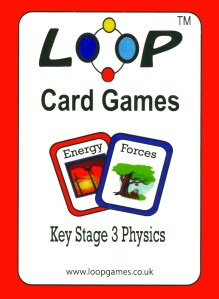
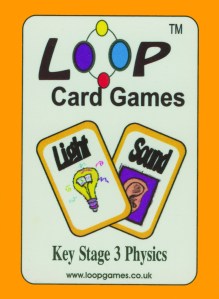
forces

And this…

light

It wasn’t long before I realised a qualified illustrator was needed to inject the professionalism the games required to meet the standards that children were used to.

And so began a partnership with my artist and co-games designer, Josh, to create games for the UK market. And game after game after game…we did…

careers


This was the first edition of Top Careers in Science trump-style card game.


30316_1466639029273_7827452_n

This is a picture taken in the Science Museum where Top Careers in Science, Top Careers in Engineering and Top Careers in Maths games were being stocked. A very proud moment.


After this was developed we published Ros Walker’s STEM resource to complement the career cards that she loved.

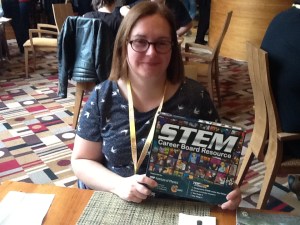
photo (6)


A special moment for both Ros and myself when we finally received the funding to create this. Well done Ros!


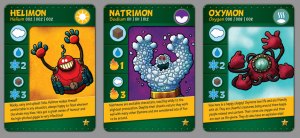
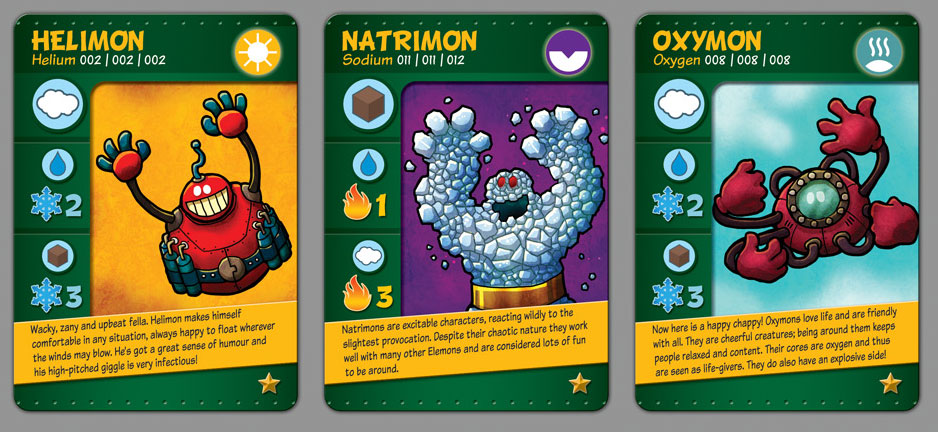
Then we got a little carried away with the next ambitious project. For the first time we entered the toy and games industry and that is certainly an experience and a half! It wasn’t as easy getting a game out in that industry as I thought. But it was the only way we could create games that would be chosen by children themselves. This was a market that we were completely out of our depths in. But that didn’t deter us to ‘give it a go’. And so for the first a science game aimed directly at children to bring the periodic table to life was born.

ElemonsD22aR02a01ZKElemons_3samples

An app was created and now a series of books is under way.

It turned out the toy & games market churned a lot of content and new technology had to be adopted. But most of all I realised quickly, after launching in 2013 and failing to achieve the desired effect,  that it was time (again) for a new team member to bring in the talent and skills I just didn’t have in this industry and so Marianna with her experience in Disney and children’s TV joined the growing determined team.

This is now a family of people who love creating games for children. And all fuelled by that moment back in my training year to replicate the exciting energy that the children had when they lit up that classroom with their sheer enthusiasm and excitement over not just learning but having fun and playing together as friends at the Glade Primary school.

No doubt the question of how all of this was funded will come up. I’ll leave that answered for another day. Needless to say none of it can be funded without the passion required to want to make it happen in the first place.

A novel way to merge science, parkour and art

FOR IMMEDIATE RELEASE

Full STEAM Ahead!

A novel way to merge science, parkour and art

“Full STEAM Ahead” is a campaign initiated by Eiman Munro, former Physics teacher, to transform science learning through art, parkour, games and stories.

Children are invited to transform the elements of the periodic table into characters that reflect their properties called ‘Elemons’. The winning submission will be published digitally and included in the next battle game titled, ‘ALLOY Mode’. The world of the Elemons is an epic adventure depicted in a series of science fiction novels. ‘Noble Beginnings’ is the title of the first novel that is planned for release in July 2016.

The campaign has now attracted many supporters including parkour pioneer, Sébastien Foucan, from Foucan Freerunning Academy. He has offered the winner and 11 of their classmates a 1 hour Master Class at his Academy. Sebastien is a massive supporter of the project and congratulates Eiman on her mission to merge play, parkour and science together.

Parkour is a growing global phenomenon and Eiman Munro believes that it is important to add that exciting unpredictable pace in a story about kids travelling in the multi-verse capturing and discovering these Elemon creatures using their parkour skills. She says, “Having the support from inspirational role models like, Sebastien is encouraging for both the project and the kids involved.” All participating schools will receive STEM games bundle worth over £150.

END


Editor’s notes:

  • Teachers and parents can sign up to the project by registering through the launchrock platform: http://full-steam-ahead.launchrock.com/
  • Nobel Beginnings’ first chapter is available on Wattpad: http://www.wattpad.com/170496608-elemons-quest-noble-beginnings-parkour-abyss
  • About Eiman Munro: A games designer and qualified physics teacher. Contact email: Eiman.munro@elementalpublishing.co.uk
  • About Sébastien Foucan: Sébastien Foucan is the founder of Freerunning and pioneer of Parkour. Well known for being part of the iconic opening scene on top of a crane in James Bond’s Casino Royale, Sébastien is a global ambassador for the Freerunning discipline and has established his own Foucan Freerunning Academy to pass on his personal philosophy and skills.

Sébastien was part of a group of friends in Lisses, (France) in the 1980’s, who developed an obstacle led style of play which they named ‘parcours’ after the military training, ‘parcours du combattant’. In 2001, Sébastien choreographed, managed and performed his first Freerunning show in Frankfurt, Germany.

Sébastien came to prominence in the UK in 2003 with the Channel 4 documentary ‘Jump London’ which featured Sébastien and his friends Freerunning across the city’s famous landmarks.  A subsequent documentary, ‘Jump Britain’ aired in 2005 and included Sébastien jumping the retractable roof of Cardiff’s Millenium stadium. Sébastien appeared in the music video for Madonna’s 2005 single, ‘Jump’, and went on to accompany Madonna on her 2006 Confessions Tour.

It was also in 2006 that Sébastien made his acting debut, starring as Mollaka in the 21st James Bond film; Casino Royale. In 2008, Sébastien’s first book Freerunning – Find Your Way was published. The book highlights the philosophies and values behind freerunning and how they can be applied to your daily life. Following the success of Casino Royale, Sébastien went on to star in The Tournament (released in 2009) playing the role of assassin Anton Bogart.

Since 2011, Sébastien has established his own Foucan Freerunning Academy in London and has become an accomplished inspirational speaker for corporations, international governing bodies, sports clubs and schools.

In 2014, Sébastien was elected as President of Parkour UK and is a proud ambassador for the discipline. In 2015, Sébastien became partners with Oxygen Freejumping because of a shared vision to promote playful activity.

For more information contact: Academy@foucan.com or Kirsten Lonsdale 07957 417704


Teaming talent sought for Elemons’ science gaming mission

ElemonsD22aR02a01ZK

Join our growing team to bring parkour, science fiction and games visually to the multi-verse!

Take Elemons and help us launch it to beyond the stratosphere. We’re looking for techno-talent who can create an engaging interactive site for 8 – 12 years olds. This is a partnership opportunity for the long term.

We create offline games and stories for kids, can you capture them for online play?

Tweet @eimanmunro

E-mail: eiman.munro@elementalpublishing.co.uk

Elemons_3samples