Fractals in conversations: An Observation

Observing Amanda Palmer’s (in the video below) reply to Neil Gaiman’s question about her memoir showed me something interesting. She threw her head back cast her eyes upwards, closed them then looked down. This behaviour to me is akin to fishing. The casting of the line upwards (head back- eyes up searching into the pool of memories) as strongly as you can in order to throw it deep and far into the sea/lake to successfully catch a bite.

The act of self-similar behaviour is one aspect of a fractal. But a fractal is about scaling the behaviour beyond the simple level. So that’s something I’ll have to think about further as it isn’t obvious and intuitive from the example I observed.

But for now, it’s interesting that Amanda herself makes a self-similar comparative behaviour in her own past career as a street model. For my personal interest, this use of analysing behaviour is important during communication.

Many times I’m finding that due to the way I analytically approach subjects, people, conversations it is rare to click with everyone and vice versa. It didn’t matter so much before when I was with like-minded STEM people, teachers, scientists, students because they naturally enjoyed analysing and questioning but now that I’m writing and communicating through the art of writing I need to find ways to be eloquent and coherent to be understood at least enough so that my thoughts or point of view is not taken erroneously.

Whilst my writing skill develops I’ll enjoy observing and learning from the experts who have mastered the ability to convey their thoughts in such a way that resonates with the masses.


Fractal Writing

I’m going to write something that I’ve always been fascinated by:

Fractals

And I’m not entirely sure why I’ve been fascinated by this concept but I remember my first encounter with it during my days at uni. A science paper written by a staff member of Prudential wrote about its application. Whether that application was based on insurance – I couldn’t recall. But ever since then the idea stuck with me.

Every time I sit at my desk to put together a way to explain my layperson’s application of the concept in my career, I would make the mistake of visiting one of the numerous sites on the subject and immediately shy away from sharing my own amateur perspective.

After all, the concept I’m using is borrowed from the Mathematical Arena and using it in the way I am may be viewed as trivialising it. I don’t think that I am but I must start somewhere in my reflections and so this post is my starting mark.

With that little I-am-not-worthy disclaimer I shall, nevertheless, proceed. Ta very much.

Changing careers successfully is something that I’m not too unfamiliar with as I look back at my previous experiences which include:

  • Actuarial Trainee
  • Physics Teacher
  • STEM Games Designer

It was by accident that I stumbled on writing. A purely organic process. When one of my games turned into a story I began to scribble down what I thought was ‘writing a novel’ – it wasn’t. Many writers know this first encounter when approaching the idea of writing their first book. But I honestly was too naïve, call it ignorant, to understand that actually what I had was an elaborate synopsis at best or a shoddy piece of work at worst.

Never mind that. Upon finally deciding that I wanted to become a writer, I asked myself for the first time recently ‘what do I need to change in myself to become a writer’. The answer seems obvious, doesn’t it?

To write.

That’s fine but being who I am I had to find a way to adopt a habit without forcing it otherwise I’ll get bored and move on (again). I don’t want to do that. I want to write. And I want to write well and not be put off by anything in reaching that goal.

By accident, I discovered a method that might help me do that. I’ll refer to the ‘accident’ in another post.

Before that, you’re probably wondering what on earth do fractals have anything to do with this. Well, fractals have two fundamental properties:

  • They’re repetitive
  • They’re scalable

In their scalability, they exhibit self-similar patterns (of behaviour when I applied it to myself).

So being lazy or, I’d prefer calling it, working to my strengths, I considered the simplest form of a fractal to change my behaviour and allow myself to exhibit that of the writer that I want to become.

Thought – that’s what I came up with. (Actually, it might be intention from an even smaller scale – I’m not sure.)

This was the smallest component in my fractal template that I am now using to become a writer – my thoughts. I had one thought. That thought was imagining myself in the act of writing. Remember that I haven’t got the habit of writing as a writer, so the first step is to see myself doing so. And I had to do this repeatedly until my body had enough of seeing it in my head that I had to physically do it. When you think about something enough to avoid doing it you have to stop thinking of it otherwise it’s inevitable to happen in my experience. (And yes I have used this to exercise – that was the ‘accident’ I discovered).

I wrote each day, it didn’t matter if it was a sentence here or there. A paragraph, a chapter. It didn’t matter. I just wrote. I even started to journal, again.

Words became

sentences became

paragraphs became

chapters became

acts became

a story.

Now after 12 months, I have the first draft of a manuscript. But whilst that is true the fractal theory is clear – I must rewrite it again and again and only once I am happy with that. Repeat with another.

The above is partly written to share with others but also as an intro to a journey that is more exciting to me than possibly the destination. If there is one.
8picsofCareers


Day 2: Get a Job in Publishing

I’ve had a couple of days to reflect on the weekend’s event at the Free Word Centre hosted by TLC lead by the Book Skills Collective (Jason, Jessica and James – trio of heroes is what I’ll keep calling them).

Whilst on the first day I managed to quickly knock off my stunned thoughts, it’s on the second day that I realised how powerful the course’s message was to prospective candidates in publishing.

Originally, I had the impression that the course may only be relevant to job candidates in publishing but it’s equally relevant to writers who feed the publishing machine. (A good thing too because it turns out a lot of publishing attendees on the day were writers too.)

It’s useful in the sense that writers should know the immense work that goes on behind the scenes to appreciate how much work is involved in bringing a book out into the world in the traditional sense. Self-publishers do the same for their own books on a smaller scale but it’s worth mirroring the mainstream (esp. editing processes) to provide the reading audience with the highest quality of work that they deserve. Having gone through the series of talks that took us along the journey of publishing, I’ve gained a lot more insight into the components of the machine, but more than that, in the social media age too.

Twitter played a powerful role with the #getajobinpublishing tag as it helped break the ice for many of us introverts who find the face-to-face networking side a little daunting. There were almost 100 attendees and yet threading between conversations wasn’t deemed rude as I would normally suspect, and in such instances, I would tend to hold back hovering loosely waiting for someone to feel sorry for me. Here, I recognised those I ‘met’ on twitter and that certainly helped me approach them directly.

So what sort of tools did I take from such an event?

My particular focus for this blog is the routes into publishing (this is by no means exhaustive just a starting point):

  1. Look out for Structured schemes like
    1. PRH ‘The Scheme’
    2. Harper Collins
    3. Hachette – BAME 6 months editorial
  2. Advertised Job e.g in the Bookseller, Guardian mainstream papers.

Note: Starting salaries aren’t always listed. Aki’s campaigning hard on this one. See #BookJobtransparency

3. Non-advertised jobs: Good networking is essential for this one. Take out one of the employees for coffee to ask about their role perhaps. Preferably somebody not too senior. But you can try your luck. A softly-softly approach is advised. There may not be a job opening yet but if it comes you’ll be on their minds, hopefully.

4.Agencies

  • Atwood Tate
  • Inspired Selection

5. Book Careers – run by Suzanne Collier. Highly recommended to anyone trying to enter publishing.

6. Degree courses: Chances are higher if you have a BA/MA in publishing e.g Kingston University lead by Alison Baverstock. I was one of the lucky ones to take away her book ‘

And some advice:

  • ‘The onus is on YOU to create the narrative.’

I love that stellar advice. It’s certainly made me question what IS my narrative anyway. If you don’t have one you will have given an impression either way. The question is what sort of impression do you WANT to give. That’s powerful if you start viewing yourself as a brand whether you realise it or not.

  • ‘Be systematic with your approach.’

Like submitting a manuscript just keep going and don’t dwell too much on rejection. This advice, whilst we hear often, is a habit we have to establish in ourselves and see it as a process as an essential part of getting into the industry (as in any industry).

Guests:

  • Hearing from Hamza Jahanzeb, with his infectious enthusiasm, working in the industry from an internship perspective found that his adventure included learning Mandarin in China. Do NOT cross off any path to your ideal career. This was the message I took home. And what an exciting path that was too. His witty and fun nature set in the importance of being yourself in this industry. Find what suits you.


  • Further, listening to Chris Cleave from an author’s perspective was equally delightful because his message was purely from how caring the industry can be. It protected him, and some cases literally (SAS guards thrown in too!), in many ways he felt that he could delight in doing his role as a writer and just throw himself into his field in the confidence that he is being supported by some of the very best in the industry. I was quite moved by his talk. This caring perspective is well worth understanding. It’s an industry that can’t be cold and aloof.

So much more than I mentioned above went into this event as it all ended with an interactive mock interview between Aki, the employer, and James, the candidate. The audience chirped in every now and again (and again and again – we weren’t shy anymore!) to interject at points when we thought the interview went wrong. This was a nice exercise to see how one should and shouldn’t do an interview. Needless to say, that answering questions like ‘What are your weaknesses’ shouldn’t be followed by a generic ‘I’m a perfectionist’ answer. But tailor it to yourself.

Follow the #Getajobinpublishing to read insights that were happening from many other people’s perspectives.

For me, I’ve taken that nugget ‘The onus is on you to find your narrative’.

Thank you!

Thanks to my sponsor Aki Schilz, Director of The Literary Consultancy, who’s worked tirelessly in making it all come together perfectly. Thanks also to the trio of heroes: Jason Bartholomew, Jessica Killingley, James Spackman who delivered the series of talks in such a dynamic and richly informative way.


Day 1: Get a Job in Publishing

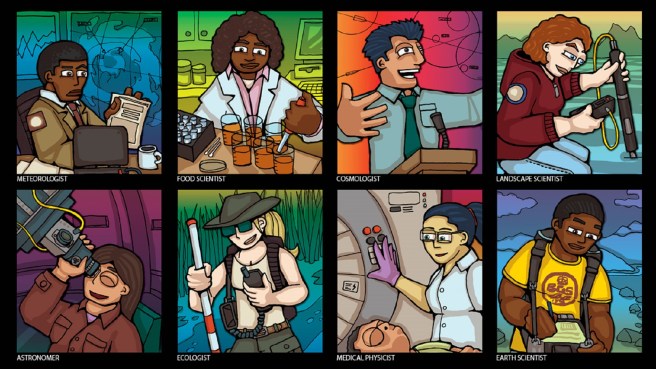
It’s been almost 2 years since I started looking into Top Careers in Publishing as part of my Top Careers project. I entered it through writing a series of stories for a game I was creating.

In that time I began researching the process of publishing a book from author creation to securing an agent all the way to distribution and sales. A feeling of buzzing excitement has always been there when an idea starts in abstract form – invisible to everyone else but you – that develops slowly from one’s noggin’ into a series of steps to eventually have the tingling sensation when it lands in one’s hand. I have had this sensational experience with my card games I was now keen on learning this exciting process with books (both fiction and non-fiction – but especially children’s fiction).

I didn’t realise it would lead me to discover and fall in love with my own Top Career. I had all the intention to continue my Top Careers project as a card game publisher not as a potential candidate for this industry, but things took a positive slant unexpectedly and for the better too.

Today I got to attend my first insight into publishing as someone who has a vested interest in learning about the industry beyond becoming a writer. This time I experienced it as a prospective candidate wanting to learn about the different departments that I might be interested in pursuing. From editorial, production, marketing and PR, to sale and HR as well as sub-rights thrown for full measure.

The event was organised by The Literary Consultancy whose Director, Aki Schilz, kindly sponsored me to attend the two-day event. All attendees were armed with a roadmap for the two-day course and the Book Skills Collective delivered some amazing series of talks. Not only were they interactive and dynamic but they were funny and relaxing with plenty of opportunity to network. A full day packed with activity and exciting guests: Briony Gowlett, Sharmaine Lovegrove, Yassine Belkacemi. The talented ‘J’ trio from the Books Skills Collective lead the event: Jason Bartholomew, Jessica Killingley, James Spackman.

And while I’m still processing and digesting it all, I’m keen to discover the next instalment of this road-map tomorrow: Day 2.


“I wouldn’t dream of it!”

A few weeks ago I tuned into LBC’s afternoon slot by Shelagh Fogarty. And I remember waiting in the car during a school pickup listening with interest to the topical debate at the time. Well at that time it was George Osborne’s editorial job offer. And it amused me to listen to the two individuals, one guest one presenter, debating how an MP (now resigned) could do justice to the needs of their electorate, which is a perfectly legitimate argument. But that wasn’t what amused me, it was when the presenter, who is obviously a journalist as well, thought it audacious for anyone to even think of entering a new profession and expecting a high profile role. “I wouldn’t dream of it!” She proudly declared.

Her words stayed with me since. This made me wonder why? Why not dream of entering any profession at any level? Is this the sort of thought that enter people’s minds that they think themselves not good enough to ask. Fair enough if they’re not good enough…but don’t let being good enough hold you back from trying to be better. In fact excel. Isn’t that what we all are aiming to do in this journey of life. To excel ourselves; better and better. Heck, why not excel beyond the status quo. Why not dream of it? The hierarchy is only there for guidance purposes. Not a strict rule – if one dares to venture beyond the ‘social norm’.

In a world that wants more women in the boardroom, a first female President of the ‘free world’, why not expect to jump a few rungs of the ladder. If this world is free then the world is our oyster and go for it. Be audacious and dare to dream. Both for men and women. Maybe this is the unintentional good that has come out of a politician taking advantage of his position (and skills of course 🙂 ).

A Little Random Flip-flopping Thought

My random thoughts on the flip-flop….

Ah yes – the flip-flop may have an innocent meaning to some but for those of Iraqi descent, it is an ancient relic with a deeper, darker meaning.

You see for an Iraqi child, and probably the grown-up version who can’t let it go, it doesn’t depict a summer stroll upon grains of warm sand accumulating between one’s toes. A pleasant annoyance I’m sure you’ll agree. No, it conjures up sinister memories of corporal punishment, of being chased by a parent down the hallway and sliding under the desk in futile attempt to hide away one’s derriere from the consequence of a flying flip-flop. It is also known in Arabic as the ‘na3aal’ using the Iraqi colloquial version. Where the ‘3’ is the Arabic letter pronounced appropriately as ‘ow’, I don’t think it’s a coincidence that it’s the same sound that one makes when in contact with said relic.

As our generation of Iraqis has all grown up we no longer use this method of disciplining torture. No, we now only use it for its primary function. But the stories those flip-flops could tell….

Do you have a flip-flop story to share?

I can call myself a writer thanks to Penguin Random House!

This post below was originally published in a closed Facebook group for WriteNow 2016/17 candidates. I wanted to share it here on my blog as a reflection for me to remind myself how grateful I am to Penguin Random House’s Write Now team.


———————–Begin———————-


So I’ve had my strop after finding out that I didn’t make it through to the mentoring programme. Despite what might initially seem as a setback, I’ve been really reflecting on how magical this experience has been for me. Someone from a non-literary background to have this opportunity to be in the same room as some of you has blown me away and has really inspired me.

In fact I was actually googling ‘writing competitions’ for my daughter when I stumbled upon the WriteNow opportunity two days before the deadline. So I thought ‘why not’ and forgot about it completely. Receiving that email inviting me to the Penguin offices on the Strand was such a confidence boost. I even prepared with a shopping trip for an outfit, any excuse, I know, but being a nerd generally I hardly cared to don on anything beyond the usual bland colours so the colour red was my breakout theme for that day.

Like many, I had arrived early, and couldn’t wait to mingle with all of you writers, I ping-ponged between so many people that I was genuinely stunned to be amongst so much talent and very flattered too. I barely spoke to any of the editors or the authors! It’s safe to say I was a bit overwhelmed. In fact when Rebecca Smart stated that they would shortlist those based on their first 5000 I shrugged it off and thought ‘I never get through these things anyway’ so I just enjoyed every minute of what I did have. At one point I had a coughing fit during the ‘Demystifying Publishing’ session and refused to leave the room because I wanted to hear everything. As far as I was concerned this was a once in a lifetime opportunity and started to tell my body to pull itself together! And it worked…eventually.

Then I had a lovely encouraging one to one with Joe Marriott, who gave me a huge confidence boost that the first submission stage was at least on the right track. For the first time I became hopeful. I don’t even remember the journey home after that.

So when I was shortlisted, it was even more nerve wracking because they asked for the remaining work or what we had of our manuscripts. I was terrified because I only had a sketch which I knew would need more work from me. I was engulfed in a bit of self-sabotage and went into denial that maybe the over-arching story was what they wanted. I reflect now and realise I should have tidied it up instead of reacting to their email with ‘you want words, I’ll give you words’ and not putting them in the order they should have been! I had a few demons to battle with that’s for sure! Especially the one with “you’re not a writer – you fraud!”

I was blessed to have connected with so many that it really helped me go through the process together. In factMuna Mohamed, Nazneen Afroza Pathak, Charlie Castelletti, Joyce-Efia Harmero and I had a cocktail of emotions during the final days. It was like one of those Friends episodes that I would title ‘The one with the many mini heart attacks’.

We had all waited over 3 months for this moment. In that time I battled with many more demons and maybe the 3 months were a blessing rather than a curse for those from London, I don’t know. For me it certainly turned out that way. Because before the results were announced I somehow had a feeling I didn’t get through and had my emotional turmoil out of the way. But in that chaos I followed the advice of, now agented, Joyce-Efia Harmer to apply to do a Writers for Children course.

And so I did, I applied to City Lit and was delighted to find that the course tutor was none other than Penguin Random House’s own Neil Arksey! I laughed, I enrolled and I got accepted!

So I’ve made a decision to focus on developing my writing craft and to take the advice from the wonderful WriteNow 2016/17 team. That is, and always has been, to ‘KEEP WRITING’.

Thank you for this wonderful life-changing opportunity. xxxx

 ——————End————-

Top Careers in Publishing: Writer

This is a career moment for me. One that is quite uncanny and surreal. Being a writer is a self-imposed title. But one you always question because until you are paid for being a writer you feel quite the fraud, well maybe it’s just me.

And that is why I find it difficult to give myself this title. That is, until yesterday, which is why it is an uncanny topic to begin the series of Top Careers in Publishing this month. No sooner had I made the intention of starting this series of articles 2 days ago than yesterday I got an email from Penguin Random House UK to invite me as a writer to their offices for an event that myself along with 49 other writers will get the chance to learn about the publishing world just a little better. A very rewarding feeling that validates all the years of writing to finally feel less of a fraud when using the title ‘Writer’. So with that I will be relying my journey within this tiny but fundamental part of the publishing world.


Without writers there are no books published, no content for scripts, magazines, films or practically any media outlet. I cannot think of any format that hasn’t any form of writing involved. But writers come in masses, there’s certainly no shortage of us. It’s the only industry that I have worked in where writers are kind and understanding to their competitors i.e. other writers. There is more hostility towards the agents and publishers, their potential employers than their competitors. There is a real camaraderie between writers from what I have experienced and it is one that is understanding. New writers at least are on the same boat. One that we hope will be sailing to its destination and not stranded in the middle of no where.

So the three main questions I ask other ‘Top Careerers’ are:

What do you do? I write middle-grade (MG) sci-fi books. They are based on my Elemons games and follow an adventurous journey through unknown territories for myself let alone my protagonists.

How did you get into it? I love creating a world from scratch and found it natural when it involved something I already do ie. design card games. So it started off as an extension to a game and has become a whole series that I’m manifesting into a tangible book to share with children.

Any tips to share? Write daily and observe quirky things people do. If you keep a book with you wherever you go, jot it all down. If someone glares back catching you snooping at them, remind yourself it’s all for the good of the novel.

Look out for more Top Careers in the Top Careers in Publishing series.


Top Careers in Publishing – Intro to….

Top_Careers

There’s something wonderfully alluring about the publishing industry. I’ve always been a fan, well since I’ve been able to read. And by publishing I speak of the traditional book sense, but you knew that didn’t you. I could also include magazines too but for now primarily books although the universal new paper smell, there’s nothing that quite beats it for me. Libraries, bookshops are my idea of heaven on earth, and it wouldn’t hurt to have a coffee corner to accompany my book reading solitude. There. That’s a better image. Lovely.

So it seems like an accident that I fell into the card game publishing business, but I don’t believe in coincidences. It’s what I’ve been doing the past decade – publishing card games. And I absolutely enjoy it to bits and pieces. As I always say, there is nothing like having a seed of an idea that manifests magically to appear in the palm of your hand to show and share around for others to be in awe with you. If you’ve lovingly cultivated and pruned your idea to grow it will thrive into the destiny it was meant to fulfil –if it’s a game then one that is played by kids with a hint of science learning threaded within.

Yes, I realise we live in a digital age but books, card games and apps, they all start off with an idea that no one but you can initially see. Whatever that idea is, it all starts invisible, in your mind’s eye. But my experience has been card games which has taken me to many places, countries, events and people of amazing talent and stature in this world. So here I am reflecting on my career past, present and potential. From finance, volunteering to teaching, gaming, and now publishing. It may not seem so obvious but all are related or at least overlap at times.

So what the heck is my point, well as I’m reflecting I have decided to look into Top Careers in Publishing? Why not? After all, I’ve looked into Top Careers in Science, Top Careers in Maths and Top Careers in Engineering. [See Bestsellers]

So I turn my attention to Publishing. It just so happens I have one ready-made Career Card courtesy of the generous support from New Scientist; Science Journalist….

tcis_preview_sci-journalist

But this is only the beginning. In the next few months I want to explore more, many more. And specifically I highlight a list of Top Careers in Publishing below, except it’s now falling under the newly titled ‘Media and Internet’ careers (thank you digital world):

List source: Prospects

I’m very excited to be exploring all these careers. I hope to even try my hand at most, or all of them!

I’ll be posting some of them as videos on a new Youtube channel: Top Careers. So here we go…

Next article: Top Careers in Publishing – Writer


How much Science Capital you have determines your future.

STEM skills (Science, Technology, Engineering and Maths) are sought after in every industry. Yet employers in the STEM sector find it difficult to fill their vacancies due to a lack of suitable candidates.

Why are school leavers and graduates not developing their STEM skills? The answer comes from research undergone by King’s College, BP, Science Museum, who found that the Science Capital is what may determine whether a person will work in a STEM career. In short; the more Science Capital one has the more likely they will develop their STEM skills and go onto a career in STEM.

Here is a clip explaining the concept further.